About

Dr. Michael F. Byrne is a Gastroenterologist, Clinical Professor of Medicine and medical-technology leader whose career spans specialist clinical practice, advanced endoscopy, academic research and the development of artificial intelligence for medicine.
Based at the University of British Columbia and Vancouver General Hospital, Dr. Byrne has more than 25 years of consultant-level experience in gastroenterology and endoscopy. He is a Clinical Professor of Medicine in Gastroenterology at UBC, an attending gastroenterologist at Vancouver General Hospital and Director of the UBC/VGH Interventional Endoscopy Fellowship Program.
His career has developed around a consistent set of questions: how complex gastrointestinal disease can be diagnosed and treated more effectively; how procedural quality and clinical decision-making can be improved; and how emerging technologies can be evaluated against the realities and standards of clinical care.
Specialist gastroenterology and advanced endoscopy
Dr. Byrne’s specialist practice includes ERCP, EUS, interventional endoscopy, colorectal cancer, pancreaticobiliary disease, gastrointestinal bleeding, inflammatory bowel disease, sedation and procedural safety, and endoscopy quality.
His work has also included the training of advanced endoscopists and the evaluation of approaches intended to improve diagnostic consistency, procedural performance and patient outcomes. Through his leadership of the UBC/VGH Interventional Endoscopy Fellowship Program, he has contributed to the advanced training of physicians working in complex gastrointestinal and therapeutic endoscopy.
This clinical foundation remains central to his work beyond routine practice. Whether considering an emerging technology, advising an executive audience or examining a medicolegal record, his approach begins with the clinical problem, the available evidence, the applicable standard and the practical realities of delivering care.
Artificial intelligence in clinical medicine
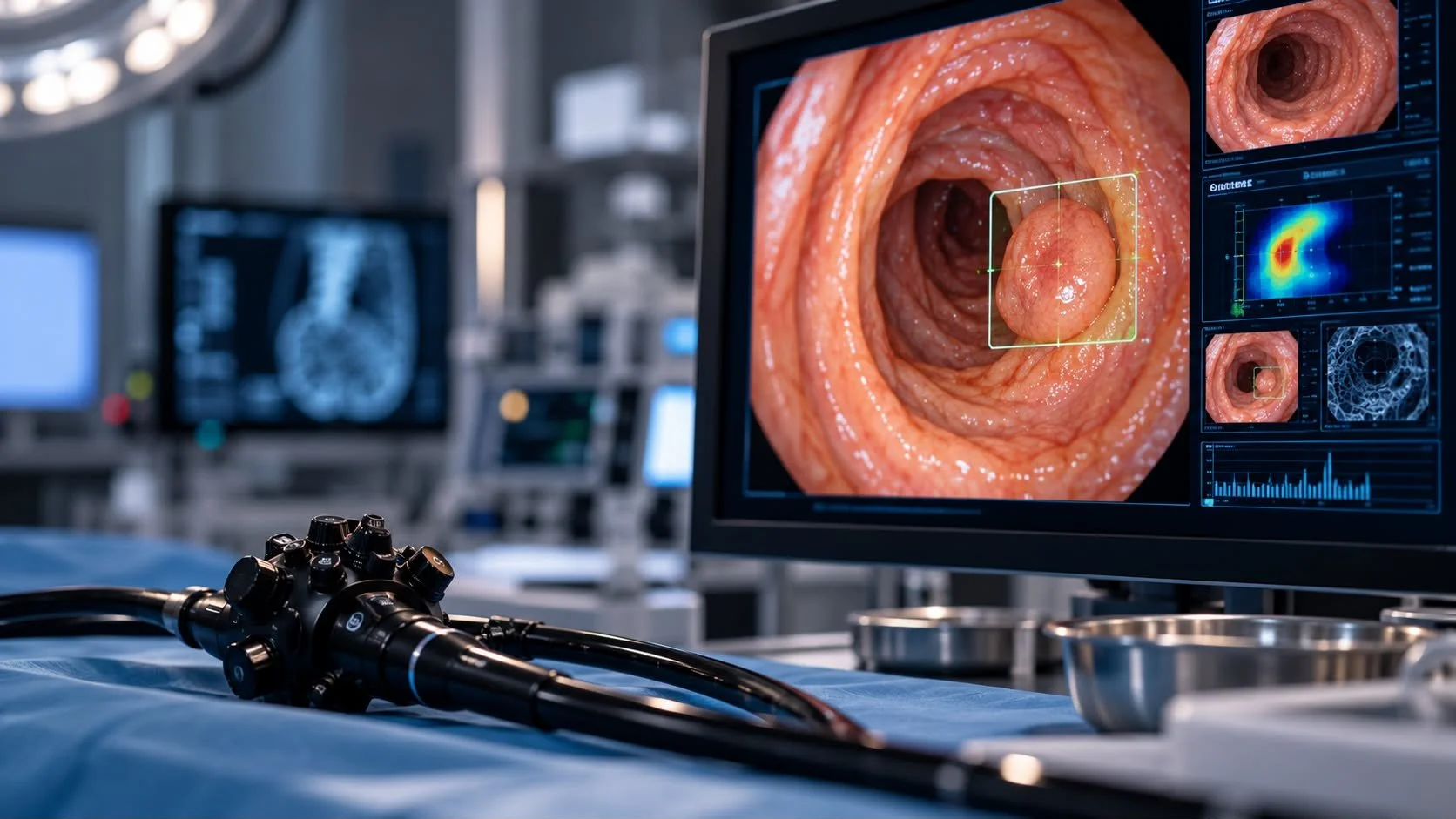
Dr. Byrne has been involved for many years in the development, study and evaluation of artificial intelligence in gastrointestinal medicine and endoscopy.
His academic work encompasses computer-aided detection and diagnosis, optical biopsy, Barrett’s esophagus, inflammatory bowel disease, capsule endoscopy, third-space endoscopy, clinical-trial endpoints, implementation standards and human–AI interaction.
A recurring focus of this work is the distinction between technical performance and clinical usefulness. His research has examined not simply whether an AI system can produce an accurate result, but how that result should be validated, how clinicians interact with AI-assisted systems, how competing technologies should be compared and what evidence is required before a tool can be incorporated responsibly into clinical practice.
This perspective places AI within the broader framework of medicine: evidence, workflow, physician judgment, patient safety, accountability and measurable clinical benefit.
Research, publication and editorial work
Dr. Byrne has an extensive academic record across gastroenterology, advanced endoscopy and AI-enabled clinical systems, including peer-reviewed research, invited lectures, scientific presentations and editorial work.
He is lead editor of AI in Clinical Medicine: A Practical Guide for Healthcare Professionals, published by Wiley in 2023. The book brings together clinical and technical perspectives on the application of artificial intelligence across medicine and reflects a broader theme of his work: translating rapidly developing technology into concepts that clinicians and healthcare leaders can evaluate and use.
His academic interests extend from established questions in gastrointestinal disease and therapeutic endoscopy to emerging issues surrounding clinical AI, validation, implementation and the interaction between physicians and increasingly sophisticated decision-support technologies.
Medical technology and Dova Health Intelligence
Dr. Byrne is Founder, Chairman and Chief Medical Officer of Dova Health Intelligence, extending his work in clinical AI from academic investigation into technology development and translation.
His work with Dova reflects the same premise that underpins his clinical and academic work: medical AI has value only when it addresses a meaningful clinical problem, is evaluated against appropriate evidence and can be implemented in a way that supports rather than obscures professional judgment and accountability.
This combination of physician, investigator and founder experience provides a perspective that crosses several environments that are often considered separately. Dr. Byrne can engage with clinicians on the realities of care, researchers on evidence and validation, technology teams on clinical requirements, and executives on the implications of deploying new technologies within healthcare systems.
Importantly, innovation is not treated as separate from clinical standards. New technologies must ultimately be considered in the context in which medicine is actually delivered: variable patients, imperfect information, workflow constraints, professional responsibilities and the consequences of clinical decisions.
Clinical experience applied beyond the clinic
The breadth of Dr. Byrne’s work supports professional activities beyond direct patient care, including speaking and executive education, medical and scientific advisory work, technology assessment, and independent medicolegal expertise.
For organizations evaluating artificial intelligence or medical technology, his experience provides a clinical framework for distinguishing technical promise from meaningful healthcare application. For professional and executive audiences, he can connect developments in AI and medicine to the decisions facing clinicians, health systems and technology organizations. In medicolegal matters, his specialist and academic experience provides a basis for examining complex records, clinical decisions, procedural issues and standards of care within his areas of expertise.
Across these activities, the underlying method is consistent: define the clinical question, examine the evidence, understand the context in which decisions were made and distinguish what can be supported from what cannot.
Dr. Byrne’s career therefore reflects more than parallel interests in gastroenterology, endoscopy and artificial intelligence. It represents a continuing effort to connect specialist clinical expertise with research, technology and rigorous evaluation—particularly where new capabilities have to withstand the standards of real-world medicine.